Introduction to the Piko 216 177-6
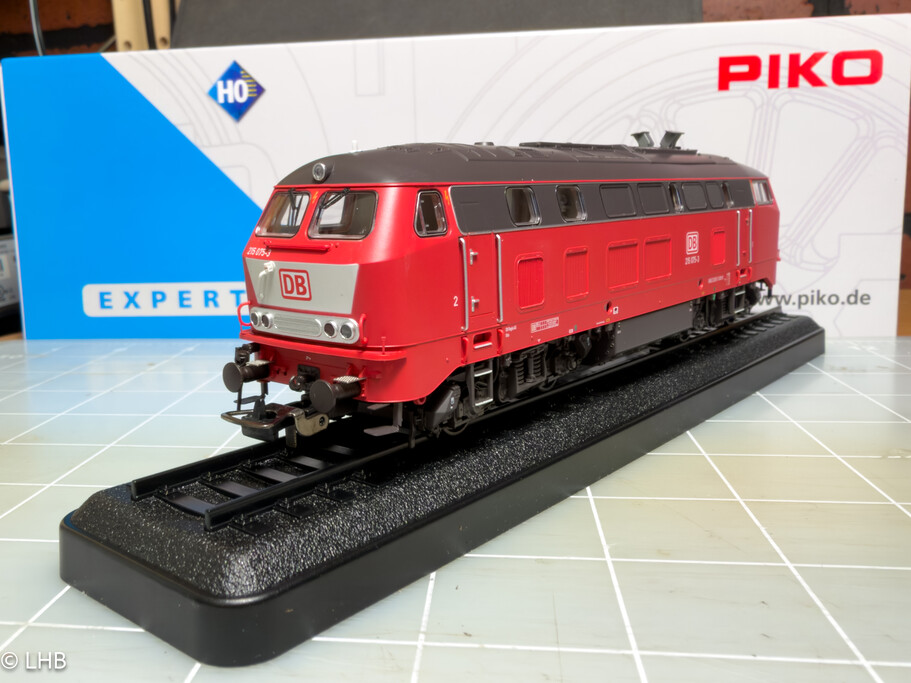
After the introduction of the Piko 216 in 2020, it was expected that Piko would introduce other V160 family models. In 2026 it introduced the 215, in various colors. I bought the 215 075-3 in the Orientrot color, the short lived color scheme from the mid-1990's.
See class 215 models in HO for a brief history of the class 215 and all the 215 models in my collection.
Specifically to the 215 075-3. It was built in 1970 and run in the old red color until 1984. In 1993 it got the Orientrot color and in 2001 it was repainted once more to the Verkehrsrot color. The description on the Piko model shows it is part of DB Regio AG, which happened per the 1st of July 1999. The model is therefore in the era between 1999 and 2001. The prototype became part of DB Cargo in 2001 and was renumbered in the class 225. It was stored in 2009 and scrapped in 2012.
DCC Sound Installation
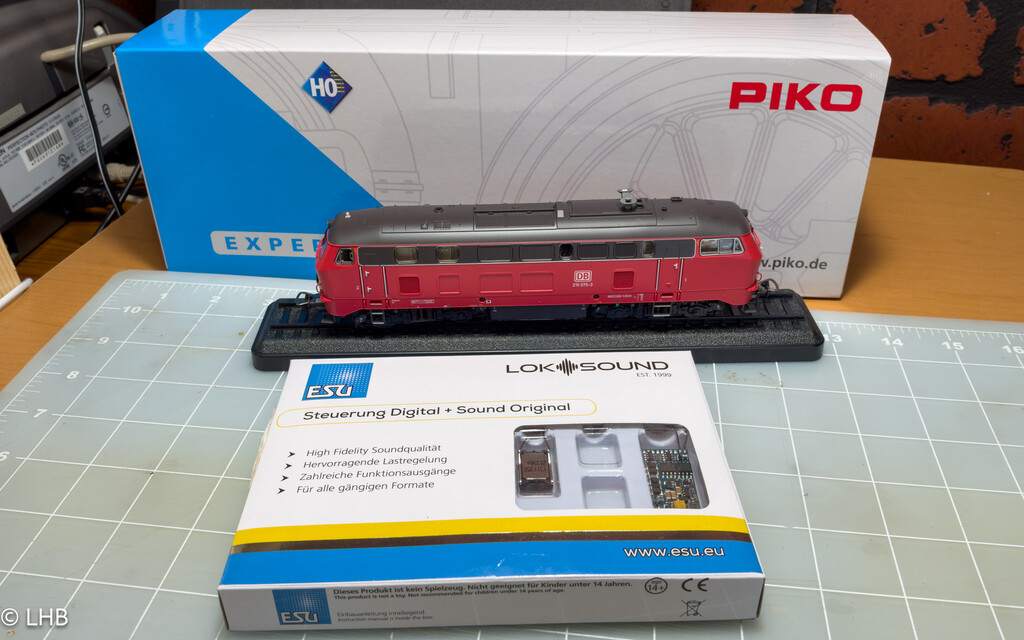
The parts for this story. The Piko 215, catalog no: 22064. An ESU Loksound 5 decoder (58412).
As the prototype had a 12 cylinder TB10, the ESU project that I've used for this install is S0450 (BR 215 MTU MA 12V 956 TB10). The function mapping is going to be the same as the ESU Piko project 94473 (for a class 216).
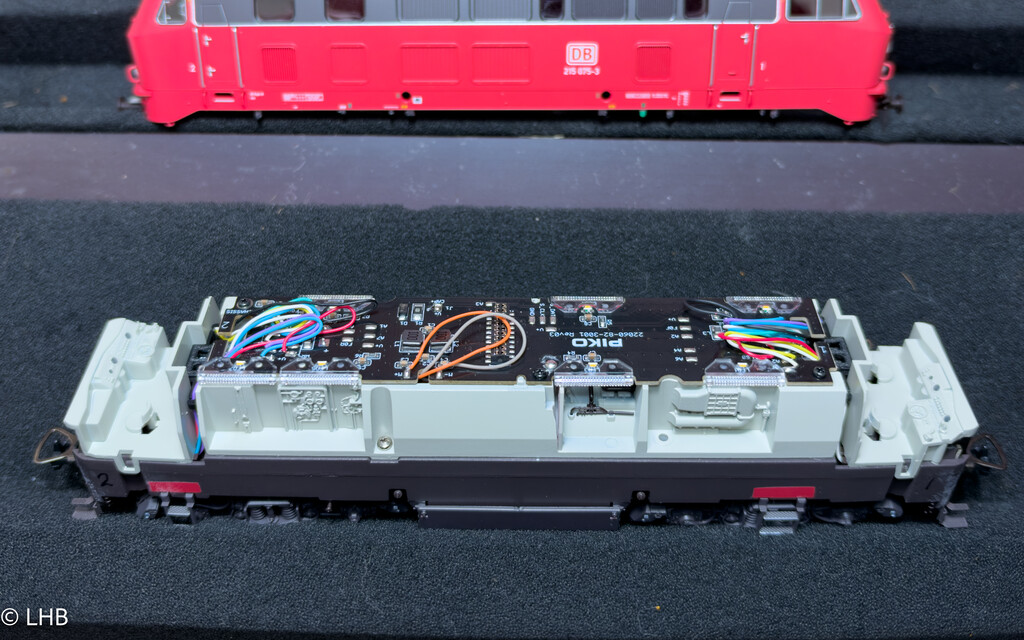
The shell can be removed by removing two screws. This shows the PCB from the top. The PLUX22 connector is visible but the mounting from the bottom of the PCB.
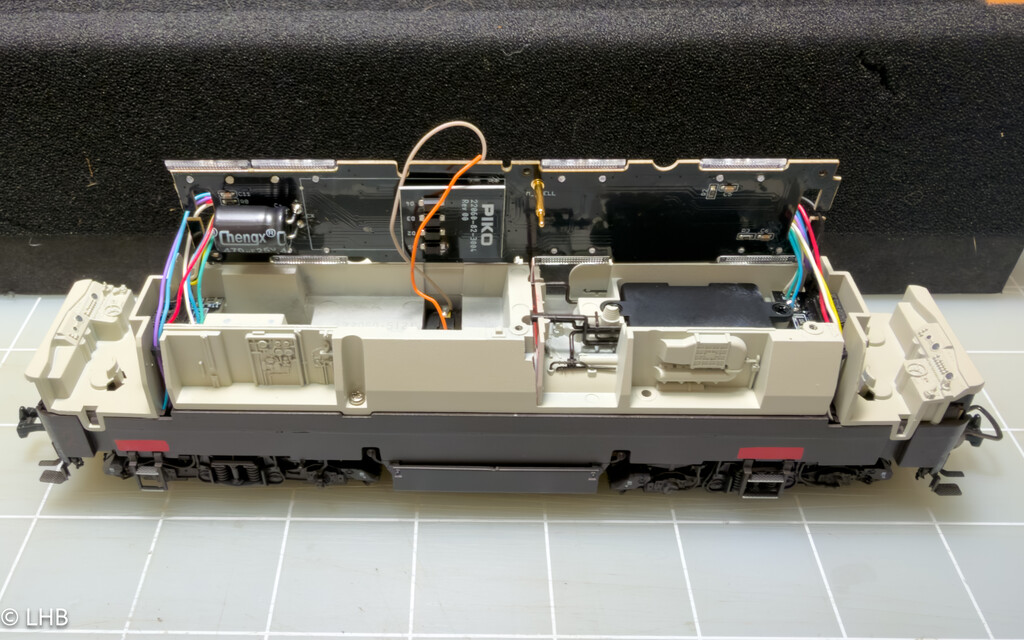
After removing the three screws that attach the PCB, the PCB can be lifted up. The PLUX22 dummy plug is now visible. To the right is the black speaker box.
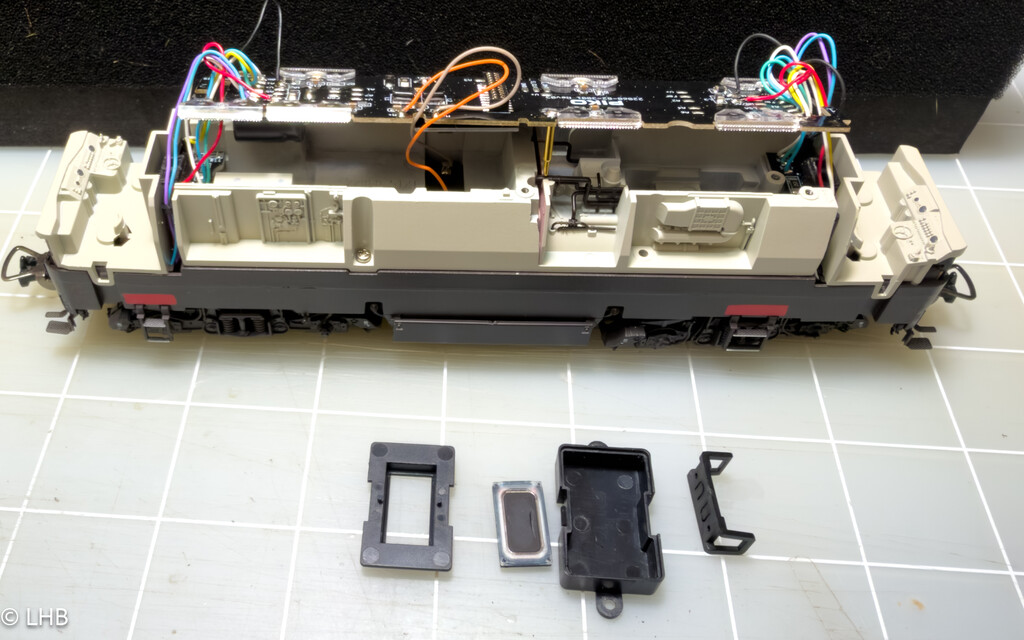
The speaker box removed. I bought a 16x9 speaker at Digikey a while back (SP-1609S-2) and it is a direct fit.
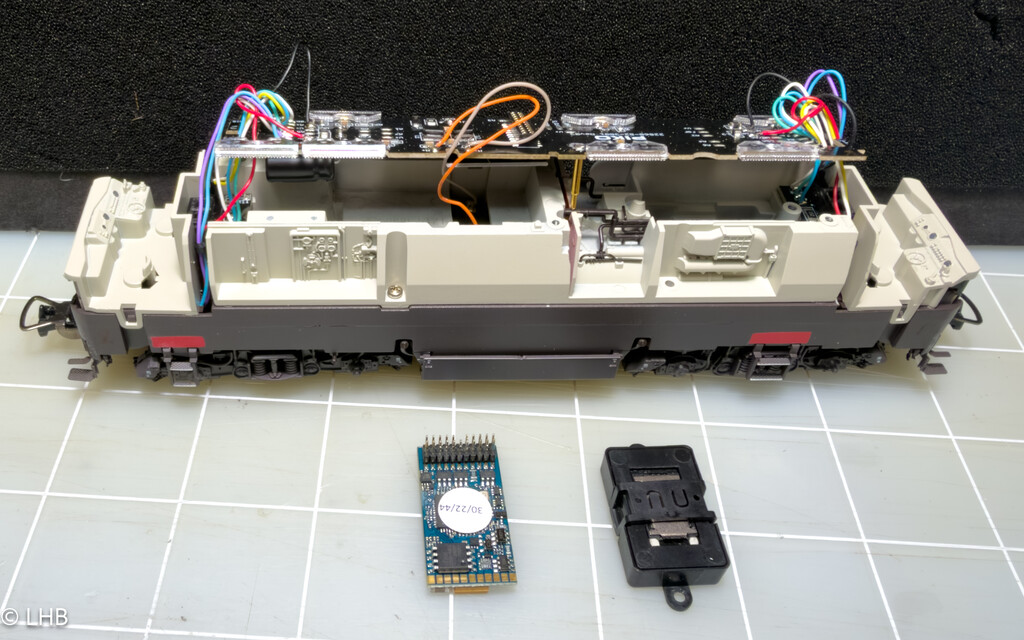
The decoder is ready. I programmed it on the ESU decoder tester. The speaker box is now fully assembled and both the decoder and speaker can be installed.
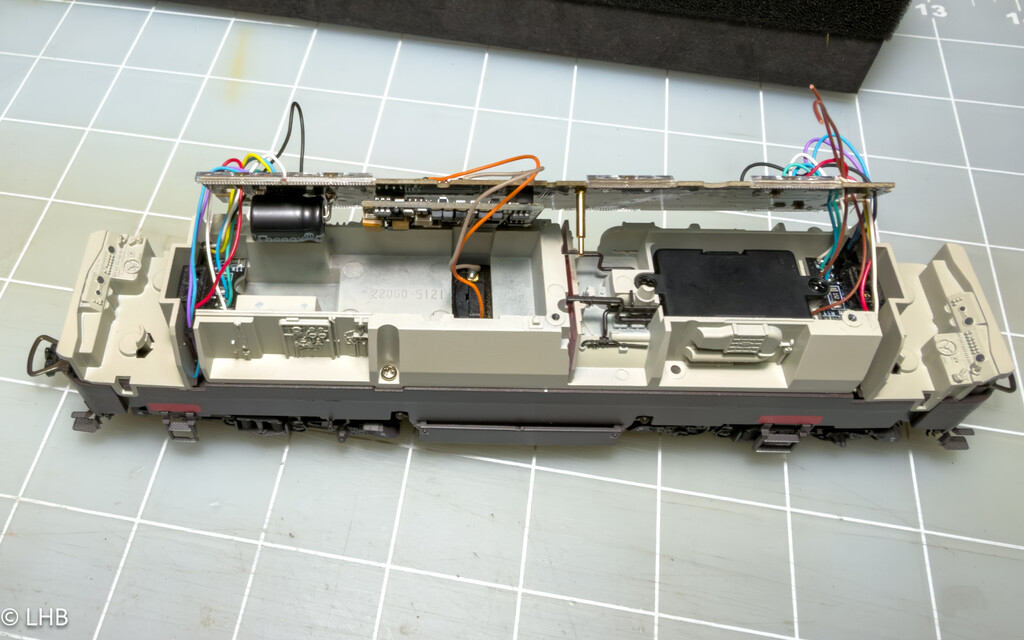
Both the deocder and the speaker are installed. I ran two wires from the speaker to the LS-A and LS-B connections on the PCB.
After this the PCB was put back and the three screws were put back in place. Then the shell can be installed back as well.
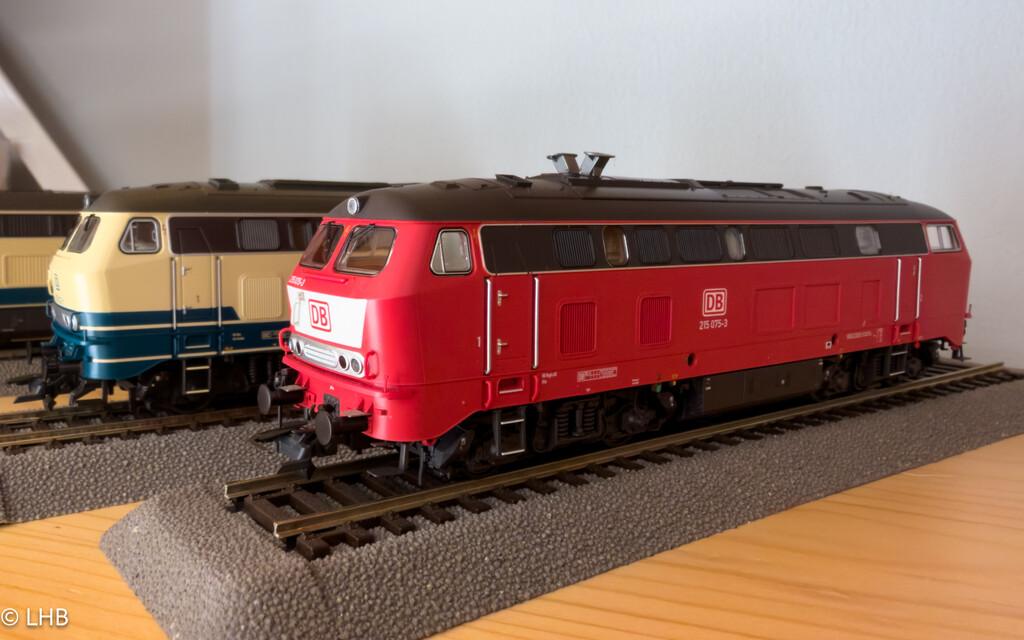
The Piko 215 is ready. For now it is placed for display on the shelf, next to the Piko 216 177-6.